A 5 Class Course.
Guidance for inner work to find more peace and happiness.
What are the Yamas?
In February I shared with you The Niyamas this month I want to take you back to the 8 Limbs and share with you five new classes on The Yamas. This is all yoga philosophy, guidance for inner work to help cultivate more peace, clarity, and happiness. You might remember that Yoga is so much more than the physical practice, postures are just one of the 8 Limbs of Yoga, the Yamas are technically the 1st of these 8 Limbs.
How we think and how we act towards ourselves and others all starts in the mind and has a direct impact on our quality of life.
I am here if you have any questions – please do get in touch! Enjoy your yoga!
The Yamas in your Yoga Classes…
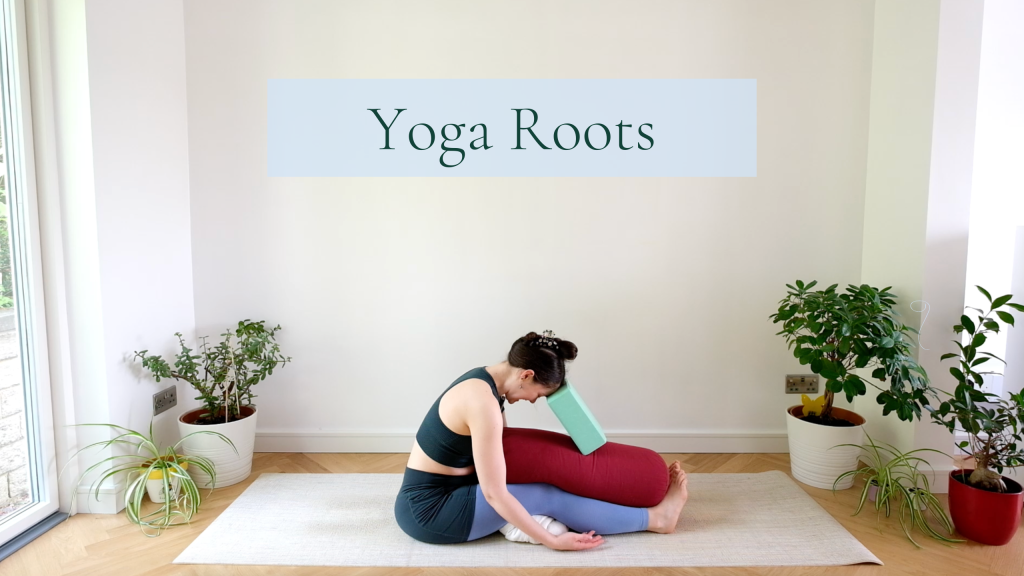
All of the classes in this course are “normal yoga classes” with plenty of movement and the poses you may be familiar with by now (if you’ve been with me for a while). I have explained each Yama here, I talk about them at the beginning of each class and I leave you in shavasana with something to contemplate. I hope you enjoy them!
Yama 1: Ahimsa – Against Harm or Non-harming
The first of the Yamas is Ahimsa. This translates as “against harm”.
Everything that follows in the 8 Limbs of Yoga is guided by this first principle.
This seems pretty natural and straight forward but when we really examine this there are lots of layers to it.
Active harming is obvious – punching someone in the face is pretty clearly going to hurt them (and probably you). But passive harming is a bit more subtle and has many forms:
- Limiting beliefs that hold us back – “I’m too old” rather than “my knees won’t like that”
- Over doing it and causing harm to the body – burn out from work or physical harm from exercise
- Under doing it and causing harm to the body – back pain from sitting too much, weak muscles unable to properly support the bones
- Constantly thinking mean or hurtful thoughts towards ourselves or others
How to you cultivate this skill?
Touch your toes. How did you do it? Did you do it in a way that caused the least harm? Did you enjoy the stretch or know that you couldn’t touch them that way so you brought the foot to the hand by bending the knee? Whichever way works for you is the correct way – not judging yourself mentally on your flexibility – just touching your toes.
Why is this beneficial?
As we delve deeper into ourselves we create a place for true healing, understanding and compassion. This yama allows us to find a peace with ourselves, our bodies and how they work. It allows us to find a peace with others and how they work – the saying “you never know what someone is going through under the surface so be nice even when they aren’t” is a simple but good representation of this yama. In doing this, in acting in this way, we literally bring more peace or calmness into the situation. Slowly we will start to remove the drama from our lives and cultivate our best, most joyful existence. Easier said than done!

Yama 2: Satya- Truthfulness or “that which is”
The second of the Yamas is Satya. This translates as “that which is” but usually it’s referred to as “truthfulness”.
How to you cultivate this skill?
Check in with yourself; be honest about what you have with you in this moment. How do you feel?
- In your body…? Do you need to be gentle with yourself this practice?
- In your mind…? Are we stressed?
- In your emotions? Did something happen?
Why is this beneficial?
As we delve deeper into ourselves we create a place for true healing, understanding and compassion. This yama is a challenging one! Be truthful with ourselves can look like stepping away from the expectations of others and leaning into our own knowledge.
For example, I know for example that sitting in lotus position is not for me. The flexibility required from my hips and knees is just not something that I can keep up without costant effort, which at one time I did. But now I’m more honest with myself. The only reason I wanted to do lotus post was because it looked cool. It really have very few benefits and none that are unique to that position (unless you count any mental benefits you might feel).
Basically, this Yama askes us to be super honest with ourselves, with why we are doing what we are doing. When you apply this honesty to your life, your relationships and how you act we slowly start to remove the drama from our lives and cultivate a more joyful experience.
Yama 3: Asteya – Non-Stealing
The third of the Yamas is Asteya. This translates as non-stealing. Similar to non-harming it’s one that most people are taught from childhood – not to take something that doesn’t belong to you. It’s probably ok to say most people don’t have a problem with this on the physical shoplifting level. But as with all the other Niyamas and Yamas we can introduced to a deeper meaning that shows us how stealing is not always about taking something physical from another person. It can be theft by intent, manipulation or deceit. It can be through our thoughts, words or actions. It can be stealing a non-physical thing from others (like their time) or even from yourself, like watching other people’s social media and from that feeling like you are not doing enough. ‘Abundance’ means to have a large amount of something, so much so that there is no need for anything else. Practising knowing that we have enough, and we are enough, is the key to wanting and desiring less, and therefore feeling a lot more whole and happy within ourselves.
How do you cultivate this skill?
Take a deep breath and ask yourself, is there something you need right now that you are withholding from yourself? It could be something simple, like a glass of water or a trip to the loo. Or it could be more serious. We steal from our energy if we don’t breathe properly or look after our bodies. We take from ourselves when we lack compassion and understanding for ourselves and our past events.
Whenever those feelings of lack, want, absence arise, practise using the mantra “I am enough” and see how it affects your life.
Why is this class beneficial?
As we delve deeper into ourselves we create a place for true healing, understanding and compassion. This yama is a very personal one. Happiness is contingent on what you already have. Looking outside of ourselves and comparing ourselves to others can bring a feel of lack or incompleteness but you are complete as you are.
Yama 4: Brahamacharya – Engage with essential truth
The fourth of the Yamas is Brahmacharya. One translation is to engage with essential truth. Ancient aspirants would sit with a spiritual teacher or retreat to caves to practice commune with the divine, from this the more well known definition was given to be ‘celibacy’. Not a practical vow for your average person. So we now take this back to it’s root of roots, it’s initial intension. It’s about not expending our energy and senses needlessly outwards (drama for drama’s sake) and instead connecting inward to something greater and more significant than our individual selves. The goal is to preserve our energy and to maintain our inner vitality.
How do you cultivate this skill?
Sit down and notice the breath. In yoga your breath is your life force, your energy. Deepen your connection with yourself but just sitting. Just being. Connect with yourself. Deepen your breath. Shallow your breath. Take short pauses with your breath, where you’re neither inhaling or exhaling. Will any of what is annoying you now, bother you in 10 years? How about 15? or 20? or 50? What about when you are dead (hopefully a very long time from now)? Connect back with the biggest picture of all.
Why is this class beneficial?
As we delve deeper into ourselves we create a place for true healing, understanding and compassion. When we sit in silence we deepen our connection to ourselves and we become more aware of the parts of our life that either drain or fortify our energy. This can allow us to take action where required or express gratitude and contentment where action isn’t needed.

Yama 5: Aparigraha – Non-Attachment
The art of letting go – mentally, physically, emotionally
The fifth and final Yama is Aparigraha. This one is going to be one that is unique to every individual. Some will fully embrace this and find peace in a monk-style minimalist existence. Other’s use it to help them let go of clutter in their home. Whilst another might use it in their relationships allowing more trust to bloom or allowing for grief to pass as we let go of what could have been… True joy is within, not in fighting against change. This is a natural way to be, so be gentle with yourself on this one. Our brains keep us safe by sticking with the familiar, by gripping on even harder, so we have to choose to let go, to loosen our grip.
How do you cultivate this skill?
Option 1) Sit down and breath. Close your eyes and ask yourself what are you clinging to? – Possessions? Thoughts? Relationships? Beliefs about your body? Jobs? Habits? Remember what we possess, possesses us. Imagine opening your palm and letting that thing slip away. You could imagine Rose at the end of Titanic (HA!) Or perhaps a leaf falling from a tree, no effort, no struggle. Just letting go.
Option 2) Sit down and breath. Close your eyes and take notice of any rehashing of rehearsing of the mind. Both of these wheels of thought keep us busy but immobile.
Why is this class beneficial?
As we delve deeper into ourselves we create a place for true healing, understanding and compassion. When we recognise this adhesion to what is keeping us stuck we can practice letting go knowing that something good is waiting to fill that space. Like a glass getting attached to it’s coaster, this vacuum creates more pressure in the way we live. When we release what we are grasping, we find more freedom.
Loved these classes? Please do let me know or leave me a review!